March 23 2026
From Sheds to Systems
Why fit-out is now the critical frontier in UK logistics.
The UK’s industrial and logistics sector is entering a new era of complexity, driven by automation, labour market pressures, sustainability requirements, planning delays and shifting land values. Yet amid this transformation, we at Contollo Group see one truth remain constant: while the base build of a warehouse may appear straightforward, the fit-out is where the real complexity lies.
“On the surface, a warehouse can look like a fairly simple construction project,” says KAM (part of Contollo Group) Director Scott Price. “But once you introduce automation, temperature control, manufacturing processes or robotics, the building becomes a high-performance machine. The fit-out is where projects succeed or unnecessary compromises have to be made.”
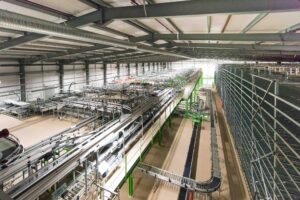
The industrial sector has historically been the quiet workhorse of the retail economy. Today, it sits at the forefront of retail success, driven by the relentless rise of eCommerce and the need for faster, more resilient supply chains with automated distribution centres being integral. Yet we continue to see many projects treat automation as an afterthought.
Integrating automation into a building that is already well into the design process and programme – or worse, already under construction – creates a level of complexity that cannot be underestimated. As we expand our industrial and manufacturing portfolio across the UK, Price comments: “We’re now in a phase where warehouse automation isn’t a ‘nice to have’ – it’s becoming the backbone of logistics resilience. The only sustainable response is to design buildings and automation systems as one integrated ecosystem from the very start.”
Price warns that the biggest operational risks arise long before a shovel hits the ground. “Developer base build specs and automation contractor requirements rarely align without challenge. For example, floor slab tolerances, deformation limits, shrinkage expectations and pattern loading are not small technicalities. If they’re accepted at face value, they can add millions to a project or introduce risks that only surface once the system is live.”
He argues that logistics operators who treat early-stage design as a strategic investment, not a procedural step, will be the ones who stay competitive. “The winners will be those who interrogate every clause, negotiate every interface, and bring specialist project managers into the process early. Warehousing has become a strategic engine for speed, resilience and competitive advantage. You can’t afford to get the fundamentals wrong.”
That mindset becomes even more critical when planning for future expansion. As eCommerce reshapes operational models, internal volume is becoming as valuable as footprint. Traditional ground-level operations are giving way to mezzanines, pick towers and multi-level fulfilment environments, but Price notes that the real challenge is balancing day-one cost with long-term flexibility. Designing for future floor slab loads, or incorporating additional steel into structural mezzanines for future vertical expansion, can avoid costly disruption later. “Futureproofing isn’t about overbuilding, it’s about making smart decisions that keep options open without inflating the base build unnecessarily.”
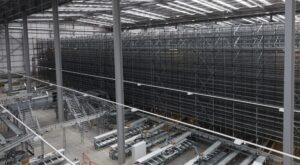
Electrical design presents another hidden pressure point. Automation firms often have not finalised their electrical requirements when the base build specification is being agreed, meaning the eventual load can far exceed the developer’s standard offer. Price says this is where specialist engineering input becomes essential. “Automation load calculations are frequently conservative because diversity isn’t applied. Without challenge, you end up designing for every motor starting simultaneously, which is unrealistic and expensive.”
Sprinkler design and insurer engagement add further layers of complexity. Automation equipment rarely conforms to standard design details, and densely packed systems, such as multi-shuttle installations, require detailed coordination to agree acceptable fire protection strategies. Price stresses that insurers must be brought in early. “If you wait until procurement to engage insurers, you’ve already lost time. Early coordination on principles and approval pathways avoids redesign, delay and unnecessary cost.”
Health and safety responsibilities also evolve as automation becomes more sophisticated. Under CDM Regulations, a Principal Designer must be appointed not only for the building works but also for the automation installation. Price advises: “Segregating the site into defined zones can reduce risk and improve control.”
Ultimately, Price says, the success of any logistics project hinges on programme cohesion. New builds and retrofits alike depend on multiple interlocking timelines, each with its own milestones and data requirements. “If these programmes aren’t synced from the outset, delays and cost escalation become almost inevitable.”
“Warehouses of the future will be industrial hubs, energy generators and data-rich environments,” Price says. “They must be designed for long-term productivity, not just short-term occupation.” Price emphasises that the winners in this new landscape will be those who align building design, automation strategy and commercial negotiations from day one. “Fit-out is no longer a technical exercise – it’s a strategic investment. Organisations that recognise this early, and who bring the right expertise to the table, will be the ones who deliver resilient, efficient and future-ready logistics assets.”
